
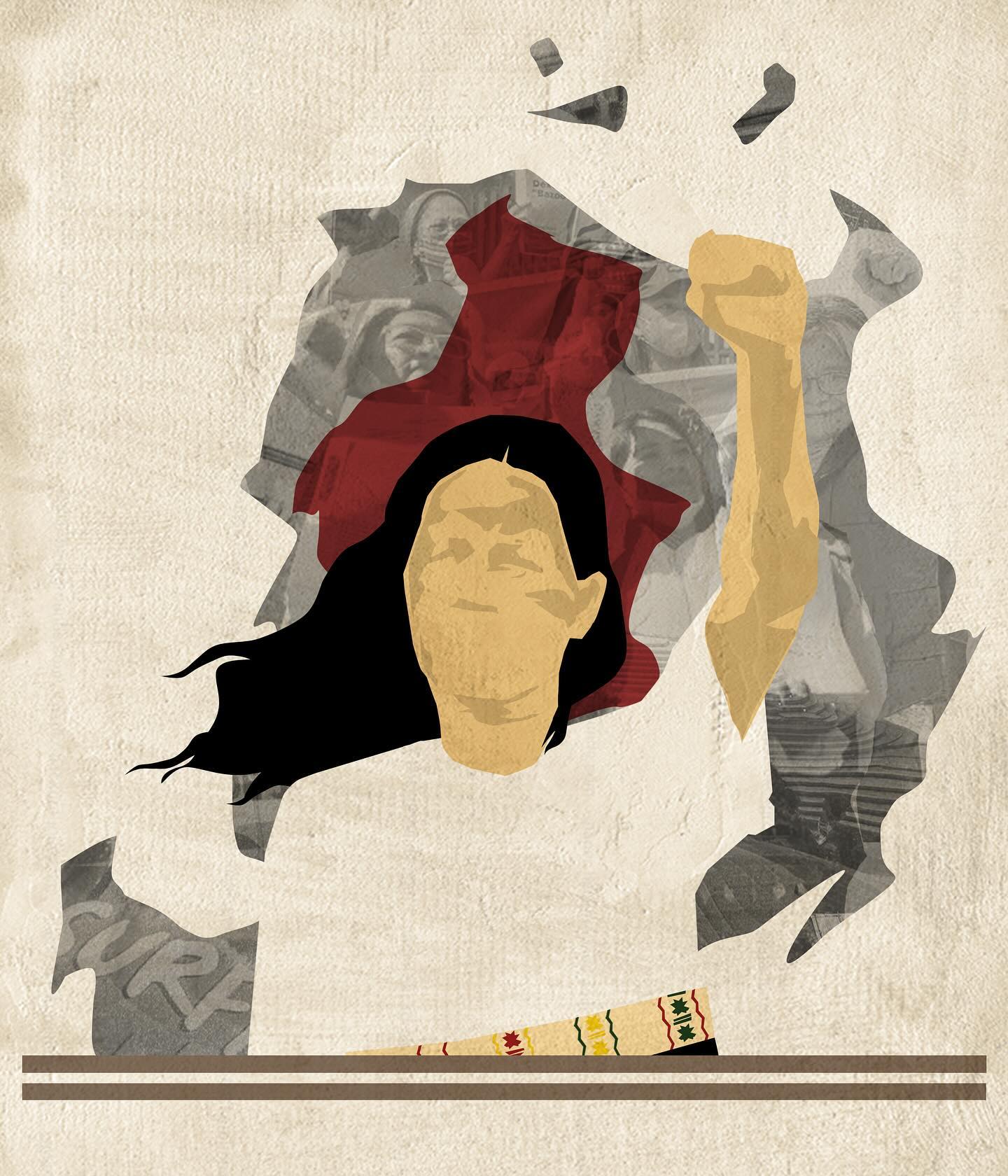
First of all, Prof. Delia, thank you for trusting Gantala Press to republish Toward a Nationalist Feminism. We are honored and excited to bring this canonic work to a new generation of feminists and readers.

You have described the context in which the book was written in the late 1980s to the 1990s, following the EDSA People Power uprising. We are interested in how feminist/independent publishing looked like in those days. How did its publication by Gloria Rodriguez and Giraffe Books come about?
Gloria Rodriguez was a friend who, as I’m sure you know, started her own independent Giraffe Books after leaving New Day Publishers where she worked for 20 years. She ran a remarkable one-woman enterprise, carrying out all aspects of publishing by herself. It’s hard to imagine how she was able to accomplish this.
As I recall, she solicited a manuscript from me, but unlike Gantala, she did not confine herself to writings by women. In this regard, Gantala is the pioneer, but I would guess that Gloria must serve as an inspiration.
You mentioned that it took you a long time before calling yourself a feminist. How was that process? What were your doubts and uncertainties, and how did you overcome these?
Many people are unaware that MAKIBAKA, the women’s organization founded by Lorena Barros in 1970, referred to itself as “revolutionary” but never “feminist.” The latter term was taboo because, rightly or wrongly, it signified “anti-male.” Aside from this, feminism also meant bourgeois and individualist. In the US where my family and I were engaged in solidarity work against the Marcos dictatorship, a similar perspective prevailed among Third World organizations that, moreover, saw feminism as white, as indeed it predominantly was.
I think it may have been the Combahee River Collective statement that in due course made “feminism” acceptable among women of color in the US. In the Philippines it was the formation of GABRIELA, and maybe a little before that it was women in KALAYAAN who gave approval for its use. I remember Aida Santos, for one, declaring bravely that she and others would call themselves feminists even as they asserted their distinction from feminists in the West. It was only then that I could call myself a feminist, but always, always with a caveat.
Based on conversations you may have had with them and your own analysis, can you elaborate on the Filipino leftists’ view on feminism? What is your response to this? What are points that you agree and disagree with?
Seventies revolutionaries in the Philippines supported a very narrow view of women’s liberation. Doctrinaire, formulaic, and sticking to the confines of “the woman question,” they could tolerate talk of women’s equality only as it applied to the productive sphere. Thus the focus of attention was on women’s employment in export processing zones, as an example. Or their exploitation as prostitutes. The assumption was, moreover, that Filipino women would be liberated more or less automatically with the attainment of national liberation.
Hardly anyone considered women’s role in social reproduction, a focus of concern that Western Marxist feminists had then been taking up. When I broached this matter, I was told that in the Philippines, women and children are highly respected. Someone (a person well-placed in the movement back home) even had the temerity to suggest that perhaps long residence in the US had infected me with feminist individualism. I also received mail from the underground informing me about the newly formed Red Detachment of Women, proof that since women were now involved in the highest form of struggle entailing giving up their lives as army combatants, no further liberation was needed. I should mention here that the part Vietnamese women played in their national liberation struggle was held up as an example for the Philippines to emulate.
Needless to say, frustration in the extreme led me to conduct research asking Filipino women from various classes (with the invaluable help of sympathetic female revolutionaries) about their role in the family. I thought this would bring to light an aspect of women’s lives heretofore unexplored. The result was Filipino Housewives Speak printed by St. Scholastica’s College. And two of my old essays in this book Gantala is reprinting are about women’s position in the family.
Of course it was just a matter of time and further developments around the world when the movement would be persuaded to accept the significance of feminism. Even so, you might say that I was forced by circumstance to make a shift from activism to research and the academy.
In the Preface to the new edition of TNF, you wrote, “For back home, to recall now defunct revolutionary language, the ‘broader struggle,’ that of national sovereignty, seems to have dissolved into thin air.” Can you expound on that? As shown by the government’s unceasing and intensified counterinsurgency campaign, where hundreds of union organizers and leaders from peasant and fisherfolk communities continue to be harassed, illegally arrested, and killed, it seems that the imperialists and their lackeys are still very much threatened by the people’s struggle for national sovereignty.
Thank you for correcting me by calling attention to the continuing struggle. I cannot agree with you more about the impunity with which the current and previous administrations have ruthlessly suppressed not only the insurgency but also the rightful dissent of legal organizations in both countryside and city. This state violence is despicable and abhorrent. It indicates to me the trepidation with which those in government hang on to their power, knowing fully well that their wealth and wherewithal is never legitimately earned but necessarily rests on the immiseration of a sizable portion of the population.
What I’m referring to, though, is the specific articulation of national sovereignty as encapsulating each and every form of resistance, which was ubiquitous in the Philippines up until neoliberalism and neoconservatism took hold around the world. This is the reason why students today, and presumably their mentors as well, believe they can launch into LGBTQ+ politics in the exact same manner that students in the US can; that is, with no reference to the Philippines as a neocolony. The very least teachers can do is specify the terms under which gender and sexuality among Filipinos can achieve meaning beyond individual expression.
When did we become co-equal with the US? To me this absence of awareness as a national collective has been made especially acute by too many factors, all of which spell “colonial mentality” in bold. We seem not to be aware that up to now our “independent” heads of state have to pay obeisance to Washington on a regular basis; that our military is captive to the US; that our soil is home to 9 active US military bases; that our education is designed to equip our citizens with work skills to hasten “other countries’ development,” as one of our former presidents frankly stated.
In the absence of national consciousness, it is not a surprise that our foremost public institutions can offer with pride courses on US high-revenue-yielding celebrities, right alongside Harvard and other ivies. And every day our academics speak, seemingly with no reflection whatever, of our country as “postcolonial.” Isn’t postcolonial tantamount to sovereign? Really?
Your use of the word “Toward” in the title of the book is interesting. Do you think that nationalist feminism shall remain like a horizon (similar to Jodi Dean’s “communist horizon”), or is it something that is achievable in our lifetime?
Yes, “toward” at the moment means something yet to be achieved. If only I knew when that future would be! I know for sure, given my age, that it will not be in my lifetime. But my fervent wish is that it will be in yours.
Were there times that you lost faith in feminism? What is the value of keeping the faith in feminism? Do you think feminism is still relevant at this point?
My answer to these may be gleaned from my responses to questions 2 and 3. But I do believe that so long as gender inequality obtains, there will be some form of feminism or an attempt to redress it.
What advice or lessons can the new wave of feminists learn in navigating nationalist feminism? How will this complement or unite with other strands of feminism, especially given the diverse feminist perspectives in the Philippines and the world?
I think knowledge of history, which includes our history as a people, is absolutely essential. It is the sine qua non for navigating feminism or for addressing any social ill. Evidence of this is how easily Marcos Jr. tampered with history and installed himself in power. Historical amnesia tends to be the best friend of oppressors, and so we must use history — that told from the point of view of the underclass — as our basic intellectual tool. It can help us discern what forms of feminism and solidarity will serve us well.
Finally, I want to thank you for the very thoughtful questions you have put before me that I’ve tried to answer the best I can. I am inspired and encouraged by the work you all are doing. Makibaka at Padayon!
January 18, 2024
Leave a Reply